Free USA shipping on orders $199+Typically 16–20 business daysSecure payment
Need help?Chat on WhatsApp
Free USA shipping $199+ · 16–20 business days
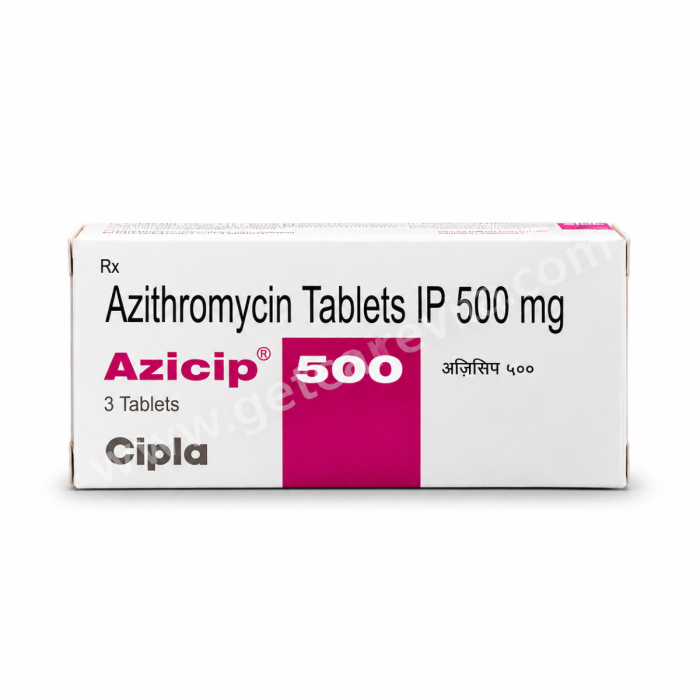


What is Azicip 500 mg?
Azicip 500 Tablet is a prescription medicine with 500 mg of azithromycin. It is a macrolide antibiotic used for susceptible bacterial infections when it is the right choice.
Uses of Azicip 500 mg
This antibiotic may be prescribed for selected susceptible bacterial infections involving the respiratory tract, sinuses, throat, middle ear, or skin. Treatment decisions depend on diagnosis and bacterial susceptibility. It does not treat viral illnesses.
Bacterial infections may require different treatments depending on their location and the organisms involved. To reduce unnecessary antibiotic exposure, use antibiotics only when a bacterial cause is confirmed or strongly suspected.
Potential Benefits
An appropriate antibiotic can help control a susceptible bacterial infection. The expected benefit depends on the diagnosis, bacterial susceptibility, and completion of the prescribed course.
How Does Azicip 500 mg Work?
The active ingredient inhibits bacterial protein synthesis by binding to the 50S ribosomal subunit, limiting growth of susceptible bacteria.
How to Take Azicip 500 mg?
Follow the treatment instructions. Tablets may generally be taken with or without food. Do not deliberately skip doses, share tablets, or change the treatment duration on your own.
Continue the prescribed course unless the treating clinician tells you to stop. If a dose causes troublesome effects or you cannot continue the schedule, contact the prescriber rather than using leftover tablets later.
Dosage of Azicip 500 mg
The prescribed schedule depends on the infection, age, and medical history. Tablet strength does not determine the appropriate daily dose.
Missed Dose
Take the missed dose when remembered unless the next dose is near. Do not double doses.
Overdose
Contact a poison control center promptly for suspected overdose. Seek emergency assistance for severe symptoms.
Tell the poison-control professional what was taken, the amount if known, and the approximate time. Do not wait for symptoms to develop or attempt to induce vomiting unless directed by a qualified professional.
Who Is the Manufacturer of Azicip 500 mg?
Confirm the manufacturer on the actual carton or strip. The current description does not establish it.
Strength of Azicip 500 mg
Each tablet contains 500 mg of azithromycin. Verify the formulation and strength on the supplied packaging.
Precautions and Warnings
Disclose allergies, liver or kidney disease, heart rhythm disorders, low potassium or magnesium, myasthenia gravis, pregnancy, breastfeeding, and current medication.
In particular, a history of fainting, prolonged QT interval, or a family history of rhythm disorders is worth discussing before treatment. Ask a pharmacist to review any medicines you take that affect heart rhythm.
Important Warnings
Do not use if allergic to azithromycin or related macrolides or if you previously experienced liver dysfunction associated with this medicine.
Drug Interactions
Tell your clinician if you use warfarin, medicines that affect heart rhythm, or antacids containing aluminum or magnesium. A pharmacist can review the timing and monitoring needs.
What Are the Side Effects of Azicip 500 mg?
Common Side Effects
Reported side effects include nausea, diarrhea, abdominal pain, and vomiting.
If these symptoms persist, become severe, or cause difficulty eating or drinking, ask your healthcare professional for advice rather than adjusting treatment independently.
Serious Side Effects
Seek urgent medical attention for a severe allergic or skin reaction, an irregular heartbeat or fainting, yellow skin or eyes, severe or bloody diarrhea, or worsening muscle weakness.
Severe, watery or bloody diarrhea can occur during or after antibiotic treatment. Seek prompt medical assessment instead of trying to manage severe diarrhea without professional advice.
Storage of Azicip 500 mg
Follow the storage temperature printed on the supplied packaging; protect from moisture, keep away from children, and do not use expired tablets.
Check the expiration date and keep the label readable throughout storage. Avoid using damaged, discolored, or expired tablets; ask a pharmacist about proper disposal of products that are no longer suitable for use.
Frequently Asked Questions (FAQs)
What is Azicip 500 mg used for?
Doctors prescribe it for certain bacterial infections. Colds and flu are caused by viruses, so this antibiotic won’t help.
Do I need to take the tablets with a meal?
Standard tablets can usually be taken with or without food. Check your pack instructions if you’re unsure about your formulation.
What if I miss a dose?
If your next dose is still a while away, take the dose you missed. If it’s nearly time for your next dose, leave the missed one out. Take only one dose at a time.
Can Azicip 500 mg interact with other medicines?
Yes. If you take an antacid containing aluminum or magnesium, ask your pharmacist how far apart to take it. Tell your prescriber about any heart rhythm problems and all medicines you take.
What if I feel worse or get side effects?
Nausea, stomach pain or diarrhea can occur. Contact your prescriber if the infection worsens or isn’t improving. Get urgent help for trouble breathing, fainting or a fast or irregular heartbeat.
| Brand | Azicip |
|---|---|
| Active ingredient | Azithromycin |
| Strength | 500 mg |
| Form | Tablets |
| Packaging | 3 tablets per strip |
| Manufacturer | Cipla Limited |
Write Your Own Review
Shipping & Delivery
Destination and origin
Eligible orders are shipped internationally from India to customers in the United States.
Estimated delivery
Estimated total delivery is 16–20 business days, including 1–2 business days for processing after payment confirmation and 15–18 business days in transit.
Shipping charges
Standard shipping costs $25 USD. Shipping is free on eligible orders of $199 USD or more.
Order tracking
A shipping confirmation and tracking number are provided after dispatch. Tracking updates may take 24–48 hours to appear.
Delivery times are estimates. Customs clearance, weather and courier conditions may cause delays.
Read the Shipping Policy for complete terms and delivery information.


Get 20% off
your first order
Be the first to know about our latest offers and exclusive updates!
By entering your email, you agree to receive marketing emails from GetCareVia. See our Privacy Policy.
Offer valid for new customers on their first order only. Use the same email at checkout. Discount applies to the product subtotal; shipping and taxes are excluded.