
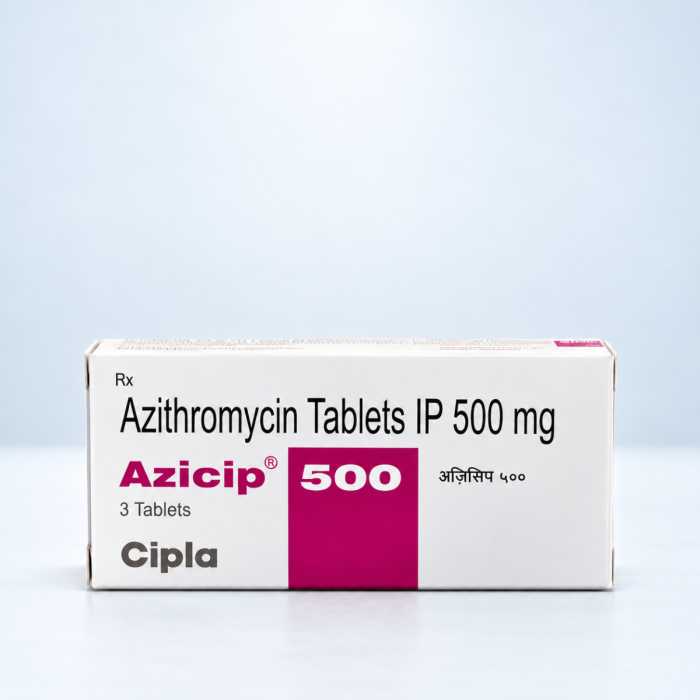
Azicip 500 Tablet
Azicip 500 Tablet is a prescription medicine that contains 500 mg of Azithromycin. Azithromycin is an antibiotic from the macrolide group and may be prescribed by a healthcare professional for bacterial infections that are known to be sensitive to it.
About the Active Ingredient
Azithromycin 500 mg
Azithromycin is a type of antibiotic known as a macrolide. It works by stopping bacteria from making the proteins they need to grow and multiply. This helps reduce the number of bacteria in the body while the infection is being treated.
Medicine Information
Azicip 500 Tablet may be used to treat bacterial infections in various parts of the body. A healthcare professional will decide if azithromycin is a suitable treatment based on the type of infection, the patient's medical history, any allergies, other medications being taken and their clinical judgment.
Azithromycin is a medicine that acts against susceptible bacteria and should not be used to treat viral infections such as the common cold or flu. Do not take leftover antibiotics from a previous infection or medicine prescribed for someone else.
How to Use
Take Azicip 500 Tablet only as directed by your healthcare provider. The correct dose, how often it should be taken and the length of treatment may vary depending on the infection and your medical condition.
Do not alter the treatment schedule or stop taking the medicine early without first discussing it with your healthcare provider.
Important Safety Information
Before starting Azicip 500 Tablet, inform your healthcare provider about any allergies, existing medical conditions or other medications or health products you are using. It is important to share relevant medical history, including liver problems, heart rhythm issues or previous reactions to antibiotics.
Some people may experience side effects when taking azithromycin. If an effect becomes severe, unusual or persistent, seek medical advice. If you experience symptoms of a serious allergic reaction, such as difficulty breathing or swelling, seek urgent medical help.
Responsible Antibiotic Use
Azicip 500 Tablet should only be used for the individual and condition for which it has been prescribed. Using antibiotics inappropriately can contribute to antimicrobial resistance, making bacterial infections more difficult to treat in the future.
Follow the treatment plan prescribed by your healthcare provider and review the patient information supplied with the original medicine.
Storage and Handling
Keep the tablets in their original packaging and follow the storage instructions listed on the product pack. Store medicine where children cannot access it and do not use the tablets after the stated expiry date.
Important Notice
Medical Disclaimer: The information on this page is provided for general product information purposes only and should not replace professional medical advice, diagnosis or treatment. Always follow the prescription, original product information and instructions from a qualified healthcare professional.
Reviews
Write Your Own Review