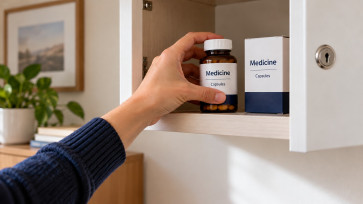
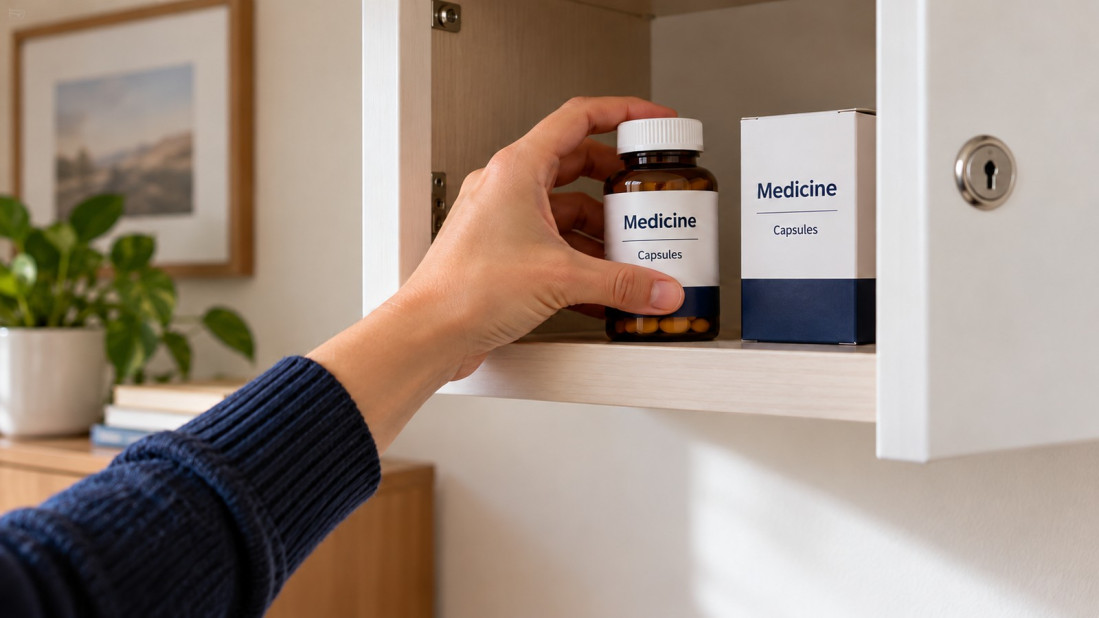
Follow the storage instructions for your exact medicine. Many medicines need a dry place away from heat. Others need refrigeration or specific storage conditions. Keep medicines where children cannot see or reach them. Before choosing a storage spot, check that it meets the instructions on the label.
Use this guide to check how you store medicines at home. It does not determine whether a particular medicine is safe after damage or a temperature problem. To answer those questions, check the product's label and ask a pharmacist or manufacturer.
Start with the medicine you actually have
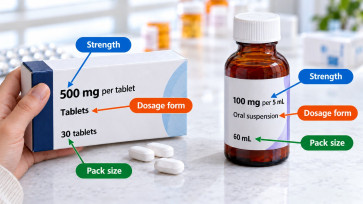
Use our guide to reading a medicine package to identify strength, dosage form, and pack size before asking about storage.
Look at the bottle, carton, pharmacy label, and patient information. Check the storage instructions before deciding where to keep it. Do not use another product's storage instructions just because the bottles look alike.
The FDA explains that storage information for U.S. nonprescription medicines appears in the Drug Facts label's Other Information section. Prescription medicines may have instructions in the information supplied by the pharmacy.
Write down any question you cannot answer from the label. For example: “Does this bottle need refrigeration before opening, after opening, or both?” Show the pharmacist the exact wording so you know what applies to that product.
Is the bathroom medicine cabinet a good choice?
A bathroom can expose medicines to humidity and warmth from showers. MedlinePlus recommends avoiding storage conditions that can damage medicine, including heat, moisture, air, and light. It also recommends keeping medicines in their original containers.
Check any proposed cabinet or drawer against the label. Heat from appliances, moisture near a sink, and sunlight may make that spot unsuitable. Also check whether a child could get to the medicine. A convenient cabinet is useful only if its conditions and access are appropriate.
For example, a bathroom shelf may be handy in the morning, but damp after a shower. A separate storage location may fit the instructions better. The right choice comes from the label and the conditions in your home, not a room name.
Should every medicine go in the refrigerator?
No. Only refrigerate a medicine when its instructions call for it. Have your pharmacist check any missing or unclear storage instruction. MyHealthfinder's medicine safety guidance advises checking labels for special storage needs.
Storage temperatures and how long a medicine can be kept after opening vary by product. If one household medicine needs refrigeration, keep its instructions separate from those for the others.
Before a trip, ask how the exact product should be carried. Tell the pharmacist how long you expect to be traveling and whether refrigeration will be available. Do not assume that an ordinary cooler or ice pack is suitable for every temperature-sensitive medicine.
What if a medicine became too hot or refrigeration stopped?
Collect details before seeking advice: the medicine name, manufacturer, strength, whether it was opened, the approximate temperature, and how long the problem lasted. If you do not know the temperature, say so.
The FDA's guidance after a natural disaster recommends checking storage instructions and contacting a pharmacist, health care professional, or manufacturer when a medicine has not remained at its required temperature. Appearance alone does not establish that a temperature-sensitive product is usable.
A practical question is: “This bottle was outside its recommended storage conditions for approximately this long. What information do you need to assess it?” This gives the professional a specific problem rather than asking whether all medicines tolerate heat.
Keep medicines away from children
Put the medicine back in its safe storage location after use. The CDC's medication safety guidance advises closing the safety cap and keeping medicines out of young children's sight and reach. Include medicines carried in bags when checking the household routine.
Do not leave a bottle beside a bed, on a counter, or anywhere else a child can reach it, even for convenience. Review the location when guests visit or routines change. Make sure everyone in the household knows where medicines should be kept.
A simple storage record
For each medicine, record the product name, the exact storage wording, where it is kept, and any unresolved question. If the instructions change after opening, note the date you opened the product.
Keep this record separate from treatment instructions. A storage note does not replace the prescription, change the dose, or tell another person to use the medicine. It can help you explain your questions to the pharmacist.
For example, record “storage instruction unclear” instead of guessing “room temperature.” Record “time outside refrigerator unknown” instead of estimating a precise number you cannot support.
Frequently asked questions
Can I tell whether a medicine is safe by looking at it?
Ask for advice if you notice visible changes. A medicine that looks normal may still have been affected by poor storage. Do not use a photograph to decide whether exposure to heat or moisture was harmless.
Can I move every medicine into one matching container?
Keep the identifying labels and product information available. Ask a pharmacist before using an organizer or changing packaging for a product with special instructions.
What should I do next?
Start with one medicine. Ask your pharmacist about any unclear instructions rather than assuming every medicine in the cabinet needs the same storage. If your question concerns a GetCareVia listing, request a readable package photograph from customer support; ask a pharmacist or another qualified health care professional about treatment or whether a medicine is still usable.
Sources checked October 13, 2026. General educational information; not personalized medical advice.