In the United States, prescription medicines require authorization from a licensed prescriber, while over-the-counter (OTC) medicines can be purchased without a prescription. Both can cause side effects and interactions. Prescription status alone does not tell you whether a medicine is stronger, safer, or suitable for you.
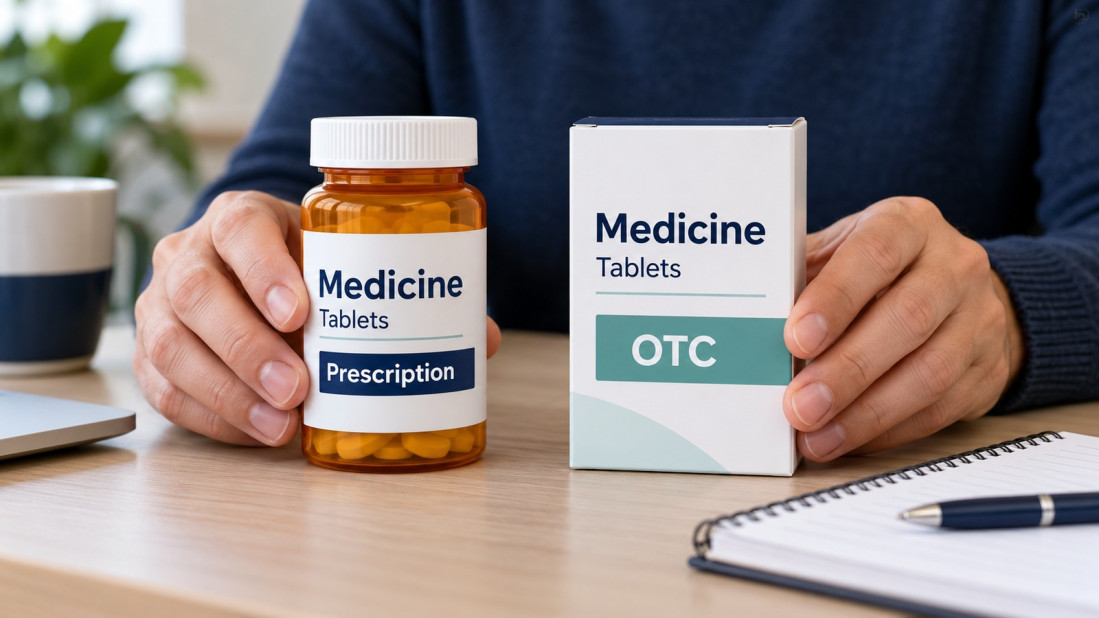
This guide explains what the categories mean, what to check on a label, and when to ask a pharmacist. The package image compares the categories using example containers; it does not identify a particular medicine or recommend a treatment.
What is the difference between prescription and OTC medicines?
The main difference is whether a prescription is required for the specific product and use. The FDA explains the U.S. prescription and OTC categories. A product's classification in another country does not establish its U.S. classification.
| What to compare | Prescription medicines | OTC medicines |
|---|---|---|
| Access | Require authorization from a licensed prescriber. Follow the pharmacy label and supplied patient information. | Do not require a prescription for the labeled OTC use. Follow the Drug Facts label. |
| Strength and safety | Depend on the exact medicine, strength, formulation, dose, and person taking it. | Also depend on the exact product and person. OTC does not mean risk-free or always weaker. |
| Ingredients | Check the active ingredient, strength, and dosage form. | Check these same details, including ingredients shared with other medicines you take. |
| Instructions | Use only as prescribed for you. Ask about unclear instructions or changes. | Use within the label's directions, age restrictions, warnings, and duration limits. |
| Professional advice | Follow any required monitoring and follow-up plan. | Ask a pharmacist or clinician when warnings apply, symptoms persist, or you need help checking interactions. |
Check active ingredients, strength, and dosage form
The active ingredient produces a medicine's intended effect. A brand name alone is not enough to identify what is inside. Products in the same brand family can contain different ingredients, and combination products may contain more than one.
Before adding a medicine, compare its active ingredients with your current prescriptions, OTC products, and supplements. Two products for different symptoms may contain the same ingredient. Do not assume that different packaging prevents duplication.
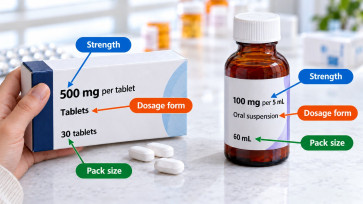
Strength, dosage form, and directions are separate details. A number on a carton is not automatically the dose you should take. Our guide to reading a medicine package explains how to distinguish those fields.
How are prescription and OTC medicines regulated?
U.S. prescription and OTC medicines are subject to FDA requirements. For new prescription drugs, an application includes evidence about safety, effectiveness, and manufacturing. Different application pathways exist; it is inaccurate to suggest that every prescription product undergoes the same set of new clinical trials.
OTC medicines may be marketed under an applicable OTC monograph or an approved drug application. A monograph sets conditions such as eligible ingredients, uses, strengths, directions, and warnings. Meeting monograph conditions does not mean the FDA has individually approved every product. OTC status concerns use without a prescription under the relevant conditions; it is not a general guarantee of safety for every person.
Which label should you read?
Prescription medicines: pharmacy label and patient information
Confirm the patient's name, medicine, strength, and directions on the pharmacy label. Read the supplied patient information and any Medication Guide. Ask the pharmacist about conflicting or unclear instructions. Do not use someone else's prescription or change your treatment based on this comparison.
OTC medicines: the Drug Facts label
The FDA's Drug Facts guide explains these sections:
- Active ingredient: the ingredient and amount per dosage unit.
- Purpose and uses: the product's action and labeled symptoms or conditions.
- Warnings: when not to use it, when to ask a professional, interactions, and when to stop use.
- Directions: how much, how often, and how long to use it, including age limits.
- Other information: storage and other relevant details.
- Inactive ingredients: ingredients such as colors, binders, or flavorings.
Check the current label even when you recognize the brand. Ingredients and warnings can change. Dietary supplements use different labeling, such as Supplement Facts; being sold without a prescription does not make a supplement an OTC drug.
Storage and questions for your pharmacist
Follow the exact product's storage instructions. Do not refrigerate every medicine or assume all medicines tolerate the same heat or humidity. Keep medicines out of children's sight and reach. See our home medicine storage guide for a practical checklist.
What should you ask before combining medicines?
Bring a current list of prescriptions, OTC medicines, vitamins, and supplements, including strengths and how you use them. Ask: “Does this product duplicate an ingredient, interact with anything on my list, or have warnings that apply to me?” Mention pregnancy, breastfeeding, allergies, and relevant health conditions.
When should you seek medical advice?
Follow the label's instructions about stopping use and seeking help. Contact a clinician for symptoms that persist, worsen, or are unusual rather than repeatedly extending OTC treatment. For a suspected serious reaction or medical emergency, seek urgent medical help.
Frequently asked questions
Are OTC medicines always safer than prescription medicines?
No. OTC medicines are intended for use without a prescription under their labeled conditions. They can still cause side effects, interactions, and harm from incorrect use. Compare the exact product and warnings, not just its OTC or prescription label.
Can the same ingredient be available by prescription and OTC?
Yes. Availability can differ by strength, formulation, intended use, or other conditions. Do not assume that an OTC product replaces your prescription. Ask your pharmacist to compare the exact products before making a change.
Can I take an OTC medicine with a prescription?
Sometimes, but the answer depends on the products and your health circumstances. Have a pharmacist or clinician check the combination before adding a medicine when you are unsure. Include supplements in that review.
Why can a medicine change from prescription to OTC?
A switch requires evidence supporting safe and effective use without prescription supervision under the proposed OTC conditions. It does not mean every strength, formulation, or use of that ingredient becomes OTC.
What to do next
Start with the exact product label and a current medicine list. Ask a pharmacist about selection, interactions, substitution, or unclear directions. For a GetCareVia listing's package details or quantity, contact customer support; support does not replace clinical advice.
General educational information for U.S. readers; not personalized medical advice. Sources checked October 19, 2026.